

Busybird
Welcome to the Busybird blog, where you can find helpful articles, updates, industry news and more. Make sure you stay up to date by signing up to our newsletter below.
The Measure of Success
October 13, 2016 What is the measure of success as a writer? If I could grant you success, what would your definition be?
Everybody measures success differently, but here are some possible definitions:
- to have a bestseller: we’d all love that, wouldn’t we? To have our book appear on – for example – the New York Times bestseller list.
- to become rich: this is a definition of success in any vocation – to be able to buy whatever you want, whenever you want. As a writer – an industry where the bulk of people don’t live off their writing – how much more validation for your success could you have?
- to win an award: it could be the Miles Franklin or the Man Booker, or even the Nobel Prize. How’s that for recognition? How’s that for success?
- fame: you’re all people talk about when it comes to storytelling, and you’re recognised in the streets.
- adaptation: your books are adapted for film or television.
When you consider how many published authors there are, how many of them manage to get to any of these heights? A fraction? Less? The figure’s even tinier when you think about just how many writers there are, period. Another concern here is if you do reach any of these pinnacles, where do you go? And how do you deal with the pressure of now having to maintain (or surpass) that standard? These are just asides, but they’re important asides because they demonstrate that there is a price to pay for this level of success, however alluring this success might seem.
Some might be more modest with their aspirations:
- to live off your writing: you might be happy living a quiet, unassuming life, and just want time to be able to write.
- having a career in writing and writing-related industries: not only do you write and publish, but work in the publishing industry, perhaps as an editor or teacher.
- being able to publish regularly: regardless what you do to pay the bills, you churn the books out, and even develop a following.
And, honestly, this is the life of most published authors. There’s nothing glamorous about it, but it can still seem unreachable when you’ve published, but your book’s not selling; or when you’re out there, submitting, and dealing with rejections.
Some might just be more hopeful:
- to be published.
That would be nice, wouldn’t it?
This is by no means a definitive list, but it does cover a spectrum of possibilities – all of them material.
Your goals might (seemingly) be more philanthropic:
- to touch a reader: plenty of stories are moving experiences for the reader, the story remaining with the reader, long, long after the reader has put the story down.
- to educate: your field might be nonfiction, and you might want readers to know about something historical, a specialist topic, or just give the reader some self-help tips about leading a better life.
There’s still an element of ego in these possibilities if the author’s intent is to be known for any of these achievements, rather than seeing these achievements exist for the sake of the achievement itself. That’s an important distinction, and it’s worth being brutally honest with yourself to see where you stand because something all these gains share is they all have a qualitative measure – you can measure how many books you’ve sold, how much money you’ve made, how many other people you’ve beaten for an award, how well you’re recognised, how many people you’ve reached, and on that list goes.
Ultimately, that begs the question of how much is enough? Even if your aspirations are modest, how modest are they? The freedom to write is a luxury. Even if your life is hectic – work, partner, kids, household, responsibilities, etc. – and all you can manage is fifteen minutes of writing-time three or four times a week, it’s still a luxury, however hard-won or well-deserved that luxury might be.
And that’s the genuine measure of success – the freedom to write, and to pursue and accomplish your goal, rather than any reward earned from it.
Are YOU a Writer?
October 6, 2016 Are you a writer?
Do you feel instinctively that you’re a writer, that you want to write and share stories with a greater audience? That storytelling is intrinsically a part of who you are? That you can’t live without writing? That – whilst you might have another vocation (to pay the bills) – writing is your true calling?
Do you constantly think about the stories you want to write – when you’re at work, when you’re doing stuff around the house, when you’re parenting, when you’re drifting off to sleep? Do the ideas shoot around in your head, exploding like fireworks, demanding your attention?
Do you attend literary functions, like book launches or readings, to soak up the ambience, enjoy the event, and later chat with like-minded people? Perhaps you talk about writing, talk about processes, talk about plans? Or it could be that you’re encouraged to be with people of your ilk and find it stimulating?
Do you immerse yourself in as much knowledge about the craft of writing as possible? Perhaps you read books or blogs about writing? Or maybe you like Facebook pages about writing, and delight in their memes offering titbits of writing wisdom. You might even share the memes, hoping others will also learn from them? Do you make friends with other writers, wanting to build your social writing network?
Do you do any or all of these things?
Well, if you do, there’s something you should know: none of these make you a writer.
Sure, they’re nice and can help you developmentally, but they’re all peripheral to the life of being a writer.
You see, being a writer requires one thing that hasn’t been mentioned.
Writing.
And if you’re not doing this, then you’re not a writer.
Now this isn’t aimed at writers who have a library of writing behind them, and might be taking a break between projects. These writers know what writing’s about. Once they have their next idea, you can count on them to work it out, sit down, and write it. They’ve learned the secret of writing is the act of writing itself, that completing anything – a book, a story, a poem, an article, a screenplay – will only ever be accomplished when they write it, however long it takes, however arduous the process, however many other distractions they have in their lives.
Unfortunately, too many ‘writers’ revel in the peripherals, as if that affords them stature. They talk about the things they plan to write, but either never actually write them (citing they’re not quite ready, or they’ve had another, better idea, or that circumstances are getting in the way), or flit between projects, until they have a ton of openings, and nothing completed. They are a writer exclusively through the act of declaring themselves a writer.
Which are you?
If you’re going to be a writer, write.
The Length of Things
September 29, 2016 One of the greatest freedoms we have as writers is determining the length of our article/story/book/novel.
Screenwriting has constraints. Generally, it’s accepted that one page will equal one minute of screen time. This might vary at times (a page might be less or more) but generally evens out. Years ago, it was accepted that your average feature screenplay would be about 120 pages – about two hours. Now, it’s been trimmed down to 100 pages. An episodic drama might be about 45–60 pages (45–60 minutes) and broken into four or five acts. A sitcom might be about 25 pages, have a teaser (the bit they play before the opening credits), three acts, and then the tag (the bit at the end the credits is played over).
Outside of the general three-act structure, prose isn’t necessarily so regimented. Your short story might be 500 words, it might be 5,000 words. Your memoir or self-help book might be 15,000 words, or might be 100,000 words. Your novel could be 30,000 words or could be 130,000 words. Unless you’re writing to a specific market (e.g. a competition, journal, or publisher) which stipulates the word limit, you seemingly have no constraints.
In fact, many may consider it exhilarating to have no constraints. A novel could entertain a litany of characters, span generations, and follow numerous subplots. That memoir could incorporate your life from day one to your ninetieth year. That self-help book could employ every example from your own life experience that you think valid to get your message across. Often, there’s no challenge to finish within a set limit, so why should we? Why not write a sprawling epic? Or a fat, cushy short story? Or an exhaustive self-help book?
Certainly, you could. Any form of writing should be exactly as long as it needs to be – no more, no less. But – outside of getting your first draft down on the page – that’s not an invitation to write forever. And, when it comes time to submit or publish, length is definitely something you need to start considering.
Let’s say you’ve written a romance novel and it’s 250,000 words long. How many romance novels of that size exist on the market? Probably not many. Readers are programmed to an expectation they want met when they pick up a book, and giving them something 3–4 times the length of your average romance novel is probably just going to overwhelm them, if not discourage them. You might argue this is the sort of length you like reading. Great. But that isn’t the standard. It’d be the equivalent of an eight-hour movie.
I’m also a big believer that every revision of your writing should get shorter, yet more packed. Waffling is common in early drafts, e.g. describing a sunrise over a farmstead might take two hundred words in an early draft, but be diluted – and yet done far more emphatically – to half that in revision. That plot point might take a page in an early draft, yet be concentrated to a paragraph in rewriting. Also, repetition is common. When you’re in Chapter 15, you might not remember that you’ve mentioned such and such already in Chapter 3.
Pacing is something else that’s important. Chapter 4 might rollick along, while Chapter 8 might bog down into languorous details that, whilst gorgeous, are unnecessary. Are those details needed? This is important to consider: if you can cut something, and it hasn’t hurt whatever you’re writing – as in the reader won’t even realise something’s missing – then it doesn’t belong there, regardless how much you love it or are proud of it.
Just because you have this boundless playground doesn’t mean you should be boundless yourself. Don’t ever believe that you’re so brilliant that your story will wow readers, hook them, and keep them engaged, regardless – regardless of length, regardless of repetition, regardless of any convention you might care to flout. This is an attitude a lot of inexperienced writers enjoy. That’s not to say you can’t break convention and be successful, but your choices need to be justified.
Be honest with yourself and your work. Examine what other people who are succeeding in your chosen market – whether it’s short story writing, prose, poetry, self-help, business, etc. – are doing. If they’re succeeding, it’s with good reason.
Whilst writing affords you tremendous liberties, they are not liberties you should abuse – particularly out of ego.
Stretch
September 22, 2016 If you’re a writer, you’re just about guaranteed one thing in this life.
Can you guess what it is?
Publication? Fame? Riches? To be read? To share stories with the world? To get glowing review after glowing review? To win awards? To have movie adaptations? To be revered? To become a seminal figure in your chosen genre? To become immortalised?
Any or all of those things would be nice, but they’re not guaranteed – far from it. So no to all of those things.
What you are just about guaranteed is that you, in all likelihood, will have a terrible posture, and back and/or neck problems.
This is an unfortunate result of sitting hunched at a computer or over a journal. When you’re young, you just don’t care, because you’re so flexible and resilient. You could sit slumped the whole day and not even feel a crick when you get up. What you don’t realise is that, often, neck and back issues don’t necessarily have to be the result of a single incident (e.g. an accident), but can occur from a lifetime’s accumulation of bad posture. Then, one morning, you wake up with tightness or pain – the body’s proclamation that it can no longer cope. As you get older, you try to manage your way through issues, but are still prone towards unconsciously slumping.
So what can you do?
There’s obvious solutions, like managing your space, ensuring that you have a good chair, that your computer isn’t too high or low, and that you sit straight. Take breaks every forty-five minutes – get up, stretch, walk around. Force yourself away from the computer, especially when you’re tired and/or frustrated – mental states that can tense you up, and exacerbate any issues you might be experiencing. Often, you don’t even consciously realise this is going on.
Away from the computer, exercise is beneficial – a regular half-hour walk can do wonders for you physically and mentally. It helps loosen muscles, gets you out into the world, and gives you the time and space to mentally unwind. If you’re stuck in your writing or unsure where to take the narrative, a walk is just about guaranteed to help you find your way. It’s usually when you’re least thinking about your writing that solutions present themselves.
Then, there are more specific forms of exercise, like yoga. Yoga is the perfect blend of gentle stretching and meditative breathing that benefits both the body and the mind. It’s also a brilliant way of uncoiling those muscles that have grown tight and resistant and a means to finding an inner peacefulness.
Busybird Publishing will be running Yoga for Writers, beginning Thursday, 13th October, from 8.00–9.15pm. Facilitated by author Suzanne Male, Suzanne is a qualified iFlow Yoga teacher, knows all about the issues of posture and muscle tightness that come from writing, and has tailored a Yoga program specifically for writers. You can book in for eight sessions at $120, or pay casually at $18.00 per session. Check out our Eventbrite page here.
How I used the Busybird Creative Fellowship – AC Watson
September 16, 2016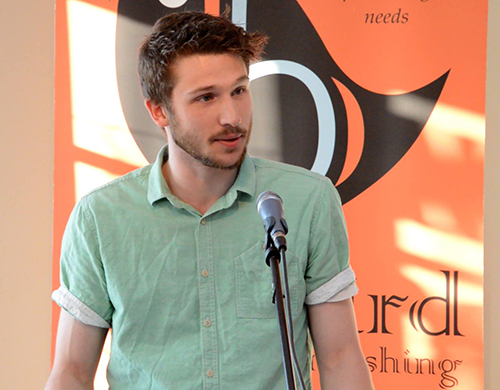
In December 2015 I was lucky enough to be chosen for the Busybird Creative Fellowship. The fellowship aims to help an emerging writer through their current project. For me, this meant developing my skills as a writer, starting my own writing group, meeting a vast network of amazing people, and ultimately, bringing my novel up to a standard so I can start submitting.
Now, as applications open for the 2017 fellowship, I urge anyone who is looking to take the next step in their writing journey to apply. Whether you have just finished a first draft, are thinking of self-publishing, or even believe you’re ready to submit, the Creative Fellowship will help you.
I received the fellowship when I was hallway through writing my second draft. I was feeling quite confident with it, thinking I might even be able to submit by June 2016. However, during the many courses that Busybird offer FREE with the fellowship, I learned so much that made me take a step back and analyze certain aspects I had previously thought needed no improvement. Through Busybird’s mentoring with Les Zigomanis, I went from having five protagonists in a 95,000 word novel, down to three protagonists in a 45,000 word novel within the space of a month. That was due to how much unnecessary information I had repeated, repeated, and repeated again. I learned to be succinct and trust the reader, and I’m not sure I would’ve have been able to do that so readily if not for Busybird.
The networking aspect of the fellowship also helped me a great deal. At events such as the Busybird Open Mic Night and their Publish for Profit workshops, I’ve met many people with such vast backgrounds in writing. Through these events I have been able to organize and facilitate a fortnightly writing group, in which sessions are broken up to critique and give feedback on an individual’s piece. Not only does this help improve my writing in general, but it adds a certain social aspect to the experience that really helps to network.
Again, anyone who is considering applying for Busybird’s 2017 Creative Fellowship, I urge to do so. It is a great initiative for an emerging writer, and will absolutely help you take your next step.