Blog
Welcome to the Busybird blog, where you can find helpful articles, updates, industry news and more. Make sure you stay up to date by signing up to our newsletter below.
Handling Criticism
December 5, 2013 If you’re going to be a writer, here is something you need to learn – and accept – very quickly: not everybody is going to love what you write.
You could spend hours, days, weeks, working on a story, you may consider it pristine, friends and family might tell you it’s brilliant, your workshopping group may praise you effusively, but that doesn’t guarantee that once it’s out in the world it’s going to be accepted or, if it’s accepted and published, that everybody will like it.
In any sort of artistic endeavour – e.g. writing, music, storytelling – we are all at the whim of subjectivity. We see this everywhere. Avatar is the highest-grossing movie of all time, which validates its popularity, but not everybody likes it. Everybody bemoans the success of Fifty Shades of Grey and the Twilight saga, many question the quality of their writing, but there are people who love these books. People loathe the talent on a TV show like The Voice, whilst others love the music.
Subjectivity is also something we experience firsthand in running [untitled]. There are stories we reject and mightn’t think enough of which we later see popping up in another journal, or placing in a short story competition. Conversely, I’m sure we’ve accepted stories that have been unsuccessful elsewhere. This would be the case with other journals, agents, and even publishers.
Everybody has different tastes.
As we go through our writing lives, we have to learn to divorce ourselves from any destructive opinions, especially if we are (and most of us are to some extent, when it comes to our work) sensitive to criticism. There could be ten opinions of our story, nine of them glowing, and we’ll focus on the one which isn’t and let that gnaw at us.
Writing’s difficult. It’s not easy to sit in front of a blank page or blank screen and conjure an entire story from nothing. Talk to any wag at a party and tell them you’re a writer, and they’ll usually regale you with how they’d like to write a book, as if the act of writing simply required spewing any words and ideas onto a page, oblivious to the need for plotting, characterisation, motivation, structure, finding the right words, the right sentences, the right flow, the right evolution, et al.
Submitting’s little easier. Many writers are apprehensive about putting their work out there, worried that rejection will lead to invalidation. For those who do submit, they’ll lead a thankless existence waiting for journals (or publishers or agents) to respond, trying one after another until finally breaking through with an acceptance, (although acceptances usually remain the exception, rather than the rule).
Many – or at least many others who don’t understand a writer’s need to write – will question why writers do it. There’s (usually) little remuneration, less acknowledgement, and the most gratification we do get is from the accomplishment of completing a story and believing (or perhaps hoping) that it works. Because of the subjectivity of art, whether it works (and whether the story is itself complete) is harder to define than the product of, for example, a cabinetmaker, or a car-manufacturer, or whatever the case might be, as their goals have set parameters that have to be met, whereas storytelling is an abstract thing – no two people would tell the same story the same way.
Time and effort aside, we put a lot of ourselves in our writing. And whether our stories are brilliant or not, whether they’re accepted or not, whether they’re loved or not, we should be proud of that.
So don’t take criticism to heart.
LZ.
Your Story: A What-Not-To-Do Guide
November 27, 2013 One of the more enjoyable aspects of being an intern is getting to read submissions. Being a reader is like going on a blind date; you hope that the time you spend ‘getting to know’ a story leaves you feeling content (dare I say, satisfied?) and that your potential suitor doesn’t turn up with their collar flipped up or talk too much during the meal.
There are a lot of submissions, and this year alone I have read hundreds of stories, most of which were eventually rejected. While the subjects, styles and structures were diverse, many of the unsuccessful stories had elements in common.
As a writer, I know how hard it is to pluck up the courage to submit your work to a publication; I know, too, the intense feelings of disappointment and frustration when your work is overlooked. However, as an intern and budding editor, I am able to step back from a story, put any emotional attachment or sympathy aside, and see a story for what it is.
Authors out there, whether you’ve submitted your work to us or not, give your story a once-over and consider if it is ready to be judged.
Here’s my guide to improving your chances of making that all-important, great first impression:
- Don’t use every big word you know, particularly in the first sentence. I think there is a misconception that proving you can write in a ‘literary’ style will make you seem like a skilful storyteller. Simple language draws people in a lot quicker than you may think.
- Don’t give us too much exposition. Establishing character(s) and setting(s) is vital, but it’s easy to overdo. When you’ve finished writing a draft, take a break from your work. Read it a few weeks (yes, weeks) later. If the story doesn’t start until two pages in, there is too much exposition. On a related note, throughout the story, don’t overlook where you’ve given more detail than the reader actually needs.
- ‘Don’t use seven words when four will do.’ This is, embarrassingly, a quote from Ocean’s Eleven (2001). Nevertheless, it is sound advice. Brevity is a virtue in the literary world. (The first thing I check when I open a submission is the word count. Stories over 4000 words really need to justify their own length to be seriously considered by me.)
- Don’t mimic anybody. You are not [insert your favourite author’s name here]. Trying to ‘channel’ their voice always – always – comes off sounding awful. Play to your strengths and write the best way you know how.
- Don’t try to be controversial. Shock tactics do the exact opposite of drawing the reader in. I’ve read so many stories that start with some sort of physical or emotional explosion that I don’t even flinch anymore.
- Don’t submit your story without editing it. You may have heard the saying ‘Writing is re-writing’; I’ll expand on that by saying ‘re-writing’ means workshopping, editing, re-drafting and/or proofreading. Your favourite author has an editor. You should too.
- Don’t underestimate the power of grammar. Improper use of punctuation makes your story – regardless of how good it is – more difficult to read. If you’re unsure how to use a semicolon, please don’t use it. Please.
I hope that didn’t come off sounding negative or overly critical. My intention is to help you improve your work and better the chances of it being accepted. Whatever you do, know this: you must stay true to your voice – this is what reaches the audience, what keeps them invested.
Remember: [untitled] is a vehicle for popular fiction in short story form. We respect writers, but we also have a difficult task whittling thousands of entries down to a handful. It’s possible that your work is fantastic but simply doesn’t fit into our publication. Don’t give up – every story is worth telling and every story has its place in the publishing world.
HK.
Ten Reading Tips
November 20, 2013 Readings are an essential step in any writer’s development.
Many don’t correlate the two: you write a book, the reader reads it. Why would you ever need to read it for an audience? But writing a book is only a small part of the process. After it’s published, it needs exposure, which means selling yourself (and thus the book) as often as possible. One of the best ways to do this is through public readings (at libraries, bookshops, etc.). Thus, we get back to the need for readings.
Many writers are petrified at the prospect of reading publically, which is unsurprising. Writing itself is a solitary pursuit. You sit alone in front of a computer, banging out your words. There’s not much public interaction, the way there would be with most other vocations. A lot of writers are also socially shy, which might be a by-product of living inside their own heads so much.
But readings have benefits aside from being a marketing tool. They allow you to see how your material works with an audience. Stuff that seems great in your head and brilliant on the page doesn’t always click when it sees the light of day. They also provide you with an avenue to feedback, either by gauging audience reaction or – if you’re interested – in chatting with them afterwards.
With so much to gain from readings, it’s something we each need to pursue, regardless of our own fears and insecurities. If those fears and insecurities become paralysing, we need to step back and assure ourselves we’ll be okay.
Here are ten tips to help you through readings …
1. Readings are not a matter of life and death
One of the biggest issues with reading in public is the fear of failure. We put crippling pressure on ourselves. What if we screw up? What if we make fools of ourselves? What if people laugh? Doubts like this race through our minds. But the truth is, So what? Lives do not depend on the outcome. Nobody will die if we screw up. The world won’t come to an end if we make fools of ourselves. If the worst happens, it’ll be a minor embarrassment but, ultimately, nobody cares. There’s no need to put pressure on yourself. It isn’t the be-all and end-all of existence. Have fun with it.
2. Perception
Although having said that, don’t tell yourself, I’ll be okay. Why aim for such mediocrity? Tell yourself, I’m going to be great! Tell yourself that often enough, you might even start believing it, and even if you miss that benchmark, at least you should land somewhere better off than just ‘okay’. The point is instead of forecasting the worst and anticipating the worst, visualise the best. Many people would have no trouble reading in the quiet and solitude of their own home. Reading in front of an audience actually isn’t very much different – the act itself remains the same: reading. What changes is your own perception of your capacity to handle reading publicly as opposed to reading alone. Tell yourself it’s little different.
3. Rehearse
Such a basic tip, but lots of people don’t consider it. Rehearse. Stuff that reads fine on the page might be a tongue twister when read aloud. Or you might simply struggle with words that you can otherwise read fine inside your head. So rehearse. And when you rehearse, don’t just read, but perform. Think of what needs intonations, where you need to pause, where you might make a particular expression to accentuate what’s being said. Do it in front of a mirror until you nail it. Rehearse particularly any dialogue you have. It can be difficult to distinguish different speakers in dialogue when reading aloud, so practise until you can give them character, (but more on that later).
4. Focus on THE word at hand
When reading, many of us have a tendency to scan ahead in an attempt to alert ourselves to what’s coming. This is the absolute best method to lose your place, or to even reread the same sentence twice. Missteps like this can cause panic. Focus only on the word that you’re reading at that moment. This is also the best way to immerse yourself in your material.
5. Print your material in a bigger, more spacious font
This makes it easier to read, and whilst a bigger font might amount to your material being spread across more pages, it actually helps you lose that sense of density in the text.
6. Pace yourself
When nervous, many of us try to get through whatever we’re experiencing as quickly as possible. Take your time when reading. You might think this only prolongs the agony, but again it’s a matter that pacing yourself tells your head (and thus your fears) you’re comfortable with the experience unfolding. It also improves the quality of the reading, which again leads to some nifty self-assurance.
7. Don’t drink
Having a couple of beers or a few wines might seem the perfect way to calm the nerves. That might be the case if you’re about to take a flight and you’re a nervous flyer; it doesn’t work so well when you’re required to speak (or in this case read) at length. Drinking makes us effusive. We slur. It amplifies discomfort, such as feeling stifled. When these things occur and we notice them, we become uncomfortable and that begins a vicious cycle where we notice the symptoms more, panic more, and implode. Coffee and milk are no good either, as they can clog the throat. Have a glass of water instead.
8. Hold something heavy
If you’re a shaker, hold something heavy under your material, like a clipboard, or a book. This will weigh down your hands and stop the shakes (or, at the very least, minimize them).
9. Choose an appropriate piece
If there’s children in the audience, an erotic section from your novel probably isn’t going to be the most appropriate. Or if you’re reading somewhere sunny and bright and cheery, a dramatic excerpt (or one that contains horror) is probably going to fail due to a lack of atmosphere. Think about what you’re going to read. Sometimes, it’s best to have several pieces, and to choose what’s suitable as required.
10. Edit for the different medium
Edit out bits that might work great when read in the solitude of your own home, but mightn’t for an audience. Nobody will know. Change words you might habitually mispronounce or just struggle with altogether. Dialogue can also be difficult to convey in a reading. On the page, quotation marks set visual cues as to who’s speaking, a luxury not afforded to readings. If you’re going to include dialogue and it has no attributors on the page, stick them in for the sake of the reading so it’s understandable for a listening audience. This is about making the reading work for a medium that has its own subtle demands.
Hopefully, these tips can help any nervous readers out there.
Don’t forget that our Open Mic Night is on tonight, beginning at 7.00pm and running until 9.00pm, although people usually hang around for a chat.
Everybody welcome, no bookings required, gold coin donation, and refreshments provided!
Hope to see you there.
LZ.
The Next Generation of Reading
November 14, 2013 When e-readers first began making appearances, I besmirched them. I was going to be a traditionalist, damnit. I didn’t want to read things digitally. How could that compare? A digital book? Ewww. It’d be like reading on a computer As for getting published in e-format, it seemed cheap. I wanted the texture of a book, to feel the pages under my fingertips, to smell the print, to be impressed by the glossy cover, and all those other tactile sensations that make books so real and attractive to us.
But gradually, I’ve become a convert. No, I haven’t thrown all my books out. They’re still piling up and spilling out from my bookshelves. I do own a Kindle, though, (one which has files spilling out of it now of ebooks that I one day plan to read).
Here’s some of the reasons I was won over …
A well-formatted ebook is aesthetically as attractive as a printed book
A lot of people use formulas to convert Word documents into ebooks. This usually leads to every paragraph being indented, additional line-spacing between paragraphs, and some other aberrations that you don’t see in standard books. It’s an eyesore – to me, at least. But some people craft the appearance of ebooks: beautiful covers, the headings and text formatted just as you’d find in a printed book. Obviously, you can’t (or least technology hasn’t yet) duplicated print quality, but it’s damn close.
Accessibility
So, just for example, I want Blaise van Hecke’s new novel, but she’s been published in Netherlands by a small publisher. I either have to wait until the book gets distribution here, or find somewhere international that will distribute. Even Amazon will take a month or so to deliver a hardcopy book. But I want this book now, damnit! Finding that same book as an ebook on Amazon will take a minute. Ordering it and having it delivered to my Kindle is virtually instantaneous.
Syncing
A lot of people don’t realise that you can get a Kindle app for your PC, Mac, iPad, or smartphone. Download it (for free), install it, and it works exactly as a Kindle does. These apps also sync. So I’m reading van Hecke’s new novel in the tub on my Kindle and get up to page 50. On the train to work, I take out my smartphone and open the book on my Kindle app. The app immediately syncs where I’m up to and opens the book at page 50. I read up to page 75. At work, I take out my iPad to pretend to work, but continue reading instead. Immediately, the iPad opens the book up to page 75. Pretty nifty, huh?
Space
Books line the shelves of my bookshelf. Then they’re stacked on top of other books, and on the roof of the bookshelf. There’s some precariously balanced piles there that need only the wrong book plucked out, and they’ll collapse – quite possibly on my head. Then there’s a serious concussion, a hospital stay, time off work, an inability to pay the bills, my house is taken from me, and there, my life is in ruins, all because I tried to find one book. An e-reader (whether it’s an e-reader like Kindle, Kobo, or Sony, or just an app on your phone) can hold numerous books and takes up barely any space.
Expense
Ebooks are cheaper than printed books. Also, you can find the classics that have fallen into public domain (e.g. Jane Austen, Herman Melville, Charles Dickens, et al) for FREE. Just download them and away you go. If you’ve just gotten an e-reader, it’s a great starting point for reading. On the flip side, if you wanted to self-publish, theoretically, you could do it for free and self-publish on Amazon, (although you would be encouraged to spare the expense for good editing, conversion, and a cover – still, a fraction of what it costs to self-publish a hardcopy).
Improve readability
Ever bought a book with tiny print and strained your eyes to the point that you’ve almost suffered an embolism? Well, perhaps not, but we do all know about eye-strain, particularly as we get older. E-readers allow us to change the font size of books, making the text larger and easier on the eyes.
 I’ll still buy hardcopy books. I love them too much not to. And they still have their benefits – print quality, those tactile sensations we love, lineage, the ability to throw it at somebody annoying us without breaking it, amongst other things. But ebooks have developed into a viable complement – I won’t use the word ‘alternative’, since that would suggest it’s one or the other, and you can have both.
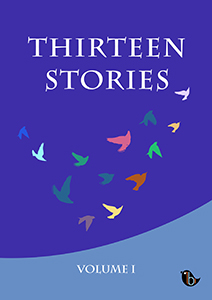
To that end, Busybird has also entered the ebook market, with the publication of our first ebook anthology, Thirteen Stories – Volume I, which contains a collection of short stories from thirteen authors published in Australian journals. Check it out right here: Thirteen Stories.
LZ.
Literary Landscaping
November 7, 2013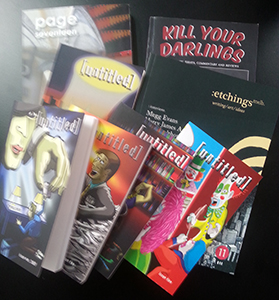 There are lots of great ‘literary’ journals in Australia – Overland, Meanjin, GoingDownSwinging, The Sleepers Almanac, Etchings, Kill Your Darlings, and the list goes on. These are journals that have been around a while and have become iconic in the literary community.
Then there’s the newer journals that are always popping up, or trying to establish themselves. This is a route we’ve gone through ourselves with [untitled], so we can empathise with the evolution many of these journals are undertaking. What usually occurs is that enthusiasm fuels the creative staff behind the first issue, and possibly the second.
Then reality sets in.
In honesty, there’s not a lot (if any) money (as in profit) in producing a journal, and it’s improbable (although I guess not impossible) that one will ever suddenly go viral and become a bestseller, the way something like Twilight or Fifty Shades of Gray did. The production of these journals are (pardon the cliché) labours of love.
They’re also a lot of hard work – reading, reading, editing, editing, editing, layout and design, proofreading, not to mention all the administrative work underpinning each endeavour. Some of our interns might read hundreds of stories in any given year. Our editors might read the same story fifteen times as they work with the author to get the best out of it.
The reward for this is the promotion of new and emerging talent in the Australian literary landscape. Either you’ll recognise the names that are becoming immediately familiar (e.g. Ryan O’Neill, A.S. Patric, Laurie Steed) or you’ll stumble upon names you’d previously never known existed.
Whatever the case, every one of those authors (like so many of us) is trying to get somewhere with their writing. Motivations may vary somewhat, as well as aspirations. Some might write as a hobby; some might do it with the hope of producing a best-seller. But, ultimately, we all write because we want to tell stories and, theoretically, a story’s not a story until an audience is there to read it. Otherwise, it’s just words on a page.
Australia produces a lot of talent. Unfortunately, whilst Australia’s arts community is healthy, and whilst there are some great funding bodies out there trying their best, the arts – whether it’s in publishing, in filmmaking, in music, et al – struggle for financing. The money just isn’t here the way it is the US, or the UK. Obviously, the logistics are different but, still, we have a financially malnourished arts community.
And yet we still manage to produce quality in all these fields. It’d be fantastic if more people could get a look in, but sometimes you just have to work with what you have at your disposal.
Which brings us back to journals. We all know about the heavyweights. But spare a thought for the newer journals that are trying to forge reputations for themselves. If you’re a reader, buy them, subscribe to them, support them. If you’re a writer, submit to them, contribute to building their foundation, become a part of their legacy.
One new journal is Asterism, headed by one of Busybird’s interns and assistant editors, Danielle Gori. Asterism is looking for everything – fiction, nonfiction, poetry, travel pieces, interviews, and artwork (paintings, pencil drawings, illustrations, photography, comic strips). Check them out and like them on Facebook.
Support your journals. It’s hard enough for writers and artists to make it here, so it’s always helpful (and encouraging!) to get a shoulder to lean on.
LZ.