Blog
Welcome to the Busybird blog, where you can find helpful articles, updates, industry news and more. Make sure you stay up to date by signing up to our newsletter below.
The Assault on our Stars: A Response to the YA Shouting Match
June 16, 2014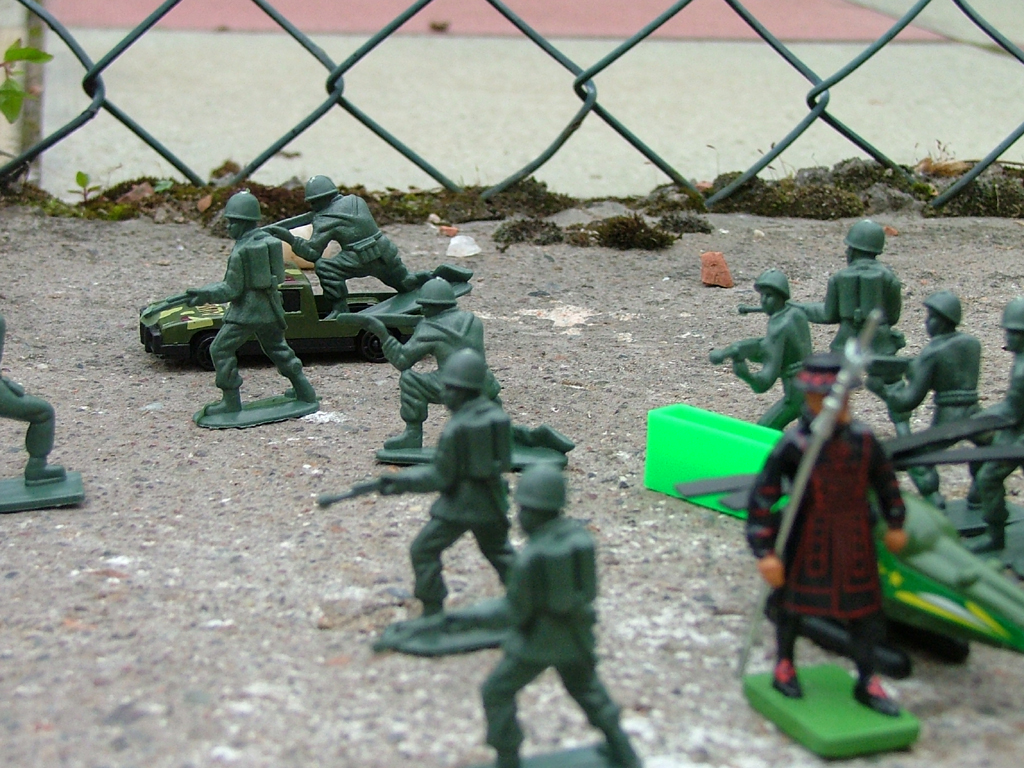 Well, The Fault in our Stars stirred up a fresh storm pretty quick. Not over its ‘sick-lit’ content or the quality of the film – full disclosure, I’ve yet to see the movie or read the book – but over the way it reignited the debate over the validity of YA fiction.
It’s an old song now, ever since Harry Potter arrived to turn writing for younger readers into a publishing goldmine and Twilight had its glitter-rich moment in the sun. There are still plenty of accusations afloat that the genre is too dark, needlessly sexualised and reinforces negative stereotypes (a classic example is the anti-feminism of Bella Swan’s character – something I agree with, by the way). But a new argument is gathering momentum. It’s that the actual audience is changing, and more and more adult readers are becoming regular YA aficionados. Or, at the very least, are more out and proud about it.
Ruth Graham’s article for Slate got some attention for its no-holds-barred attack on adults making their reading selections from the YA shelf. It’s been one of the major catalysts for the current storm of content. Just type in ‘YA debate’ as a Google search and see what else is out there – you won’t be short on reading material.
So if I’m going to talk about the YA debate, I suppose I need to clarify where I stand on the issue. Anyone who read ‘Under the Influence’ will likely have guessed that I’ll start off by advocating a wide selection of reading material unhampered by preoccupations with literary merit. I like to think I’m whole-brow – not high, not low, and probably prematurely balding.
But rather than fire my own salvo from one side of the red line, I’m instead wondering why the debate has gotten so heated to begin with. There’s more at play right now than some reactionary indignation to a single anti-YA article.
The anti-YA platform is, in many ways, an extension of the popular/literary schism that has kept the reading and publishing community occupied for decades. Its detractors condemn YA fiction as being shallow, formulaic and unimaginative for its target audience – let alone for the adults that are getting in on the craze. Even The Fault in our Stars, one of the most celebrated YA books of recent years, hasn’t escaped criticism for being clichéd and emotionally manipulative. (Again, I can’t offer any personal perspective there, so argue that one among yourselves.)
The argument is now being extended to claim that by YA fiction bleeding into older age groups, the negative aspects of the genre are going to become even more insidious. Not only will adults reading fiction intended for younger audiences be limiting the breadth of their reading experiences; they might even be hampering their own emotional development and fostering immature – and therefore flawed – reading habits and standards of literary merit. Another related concern is whether the escapist fantasies offered by many examples of YA fiction are emotionally healthy.
I feel the need to reiterate the crux of the debate’s issues because they’re hard to find at the moment. As far as the internet’s currently concerned, Ruth Graham might as well be a single isolated voice, that has gone viral simply because her article was deliberately provocative. The news feeds are saturated with reactionary statements and various defences of YA fiction.
But Graham’s perspective is not a single anomaly. As an example I could travel to the hallowed halls of the ‘high priests’ of literary criticism, maybe finding a quote from The Paris Review that condemns the infantilisation of our literary culture (a phrase, by the way, that was recently used by The New Yorker in condemnation of Donna Tartt’s Pulitzer Prize-winning The Goldfinch– just to give you an idea on how some people just won’t let us have nice things). But we know the opinions of the literary elite already, so instead I went searching for non-institutional opinions. Robert Kroese offers one of the few measured responses to the Slate article that I’ve been able to find as of late. It took quite some digging to find any other recent voices for the anti-YA camp – such as this one.
That last one’s an interesting read. Although its attack on YA literature is undermined as soon as it gains momentum – especially when she admits to never having read The Fault in our Stars after labelling it as schlock – it sums up as a puritan view of the inherent flaws in the YA category and a call for the destruction of YA as a category altogether. An opinion not without merit, based on the idea that ‘YA’ began as nothing more than marketing spin.
So that’s the field report. When it comes to popular opinion, these critics of YA fiction are in a minority, and the cited benefits of YA fiction hardly need to be referenced: that it provides harmless escapism; that it serves as a platform for reluctant readers to begin their transition into more sophisticated literature; that the alleged darkness of popular YA books is merely a reflection of what teenagers are naturally going to read anyway.
Let’s say you’re undecided on the issue – perhaps you’ve never read something categorised as YA, or at least haven’t done so since your younger years. You’re in no-man’s land but you can’t stay on the red line forever, or else you just might become a red smear from the latest clash of ideals. What should you take home from this?
I’m going to be obnoxiously self-referential and pop in an extract from an interview I did for the Australian Literature Review in 2012. Unfortunately the full interview isn’t currently available on the web, but this was part of my response to a question on the popular/literary debate – something that I think bleeds into what we’re discussing here:
In everything I write (or attempt to write), I try for something that is entertaining but mindful. But if anything is more important, it’s the entertainment factor. The greatest stories are engaging in their own right, and have a sense of greater weight without being overtly agenda-driven or obsessed with being ‘literary’ for the sake of it. They clutch at big ideas because it’s exciting and engaging to do so. That’s what I believe, at least, and that’s what I’ve always aimed for.
I should mention that the interview was for my contribution to Possessing Freedom, an anthology of integrated short stories – for young adults. I’m not typically a writer that markets specifically to young adults, so this was an new experience for me that I enjoyed. But I didn’t approach the project thinking ‘I should write something YA’. I aimed to write something exciting and engaging that just happened to have younger protagonists. Entertaining but mindful.
Any piece of fiction in any category is capable of that. Just as any piece of fiction in any category is capable of utterly failing at either entertainment or mindfulness (or both).
And with that, I can’t back away any longer from at least proposing my own clear opinion on the questions raised. So here we go:
Regarding the fate of YA? Leave that one to the marketing executives – that’s where it came from in the first place, after all.
Regarding the literary merit of YA? My answer there is one you’ve heard before – judging a book solely by this one criterion is far from being an adequate statement on its merit.
Regarding the quality of YA? It’s the same as with any other field of writing – there’s good and there’s bad, but 100% of the content is somewhere in between.
Regarding adults reading YA? Anyone solely reading one type of book again and again is limiting themselves. As long as said adults remain willing to experiment and step outside their comfort zones for something they might enjoy, the nature of that comfort zone is a non-issue.
Phew. At this point I’ll stop hogging the mouthpiece. Feel free to share your own thoughts on the debate, whether you agree with me or not.
Beau Hillier | Editor, page seventeen
Time
June 12, 2014 [untitled]. I always wondered why the anthology put out by Busybird was named this. I mean, how can something be untitled? There needs to be some kind of label attached to it so we know what to expect. Labels give us comfort. They give us definition, boundaries even, don’t they?
But reading through the anthologies I understood why it was called [untitled]. Each story is completely different, each a different world that the writer allows the reader into. To lose themselves. Sometimes, after a difficult day you need it.
The editorial of the latest issue begins with an explanation as to why the anthology had a late launch. Something about reading that resonated with me. I’ve always felt that I have no time when I write, that I am always out of time in general and so I have to push due dates for pieces back, for example. It’s frustrating and it makes you feel as if you have let someone down. So what I thought I would write about is the elephant in the room that is TIME MANAGEMENT as a writer. I’m guilty of it as I’m sure everyone is. I mean, we always wish we had more time. So how do we time-manage as writers?
One trick I’ve found is I write down what I need to do. Everything. I mean not everything to the point where I write down the time I need to brush my teeth, but the tasks I have to do for the day, and for the week. When it’s written it keeps digging at you like a flea on the metaphorical elephant (horrible analogy, I know, I cringed writing it, it’s probably been used hundreds of times, but it was for the sake of being the least bit humorous) until you finally approach it and jump over that mountain, or you get rid of those fleas. And it always feels like you’ve accomplished so much more when you can cross one more thing off your list of things to do.
Another trick I have found is have a set time when you sit down and write. Don’t sit in front of the computer for the whole day; I’ve tried to do that and end up looking up more at Youtube videos than actually writing. Because when you give yourself the whole day you just end up with a sore back and a lot of excuses as to why you should push writing back another ten minutes. The next thing you know it’s 6pm and you’ve written all up about 20 words, most of which are the word ‘the’.
One more trick I’ve found: get sleep. I know this is a cliché but sleep is important. When I have not had enough sleep I cannot function, my brain doesn’t work as it should and I end up not writing what I actually want to say. As a writer your main objective is to write exactly how you feel or to write exactly what you want to express. When you’re tired how are you able to do that?
One last trick I have found is exercise. This allows for your ideas to flow better. This is because you’re not sitting in front of an electronic device (sidenote: it’s actually been said that electronic devices can mess – for want of a better word – with your brainwave pattern at night before you go to sleep. This is why it’s a good idea to stop using electronic devices an hour before you go to sleep). In any case, when you exercise you’re burning stressful energy, and you’re not sitting in front of the computer with stress building in your mind, pushing yourself to write one more chapter or even a paragraph. Breaks help; they allow you to de-stress, especially if you’re going through that horrible and ever-dreaded period of WRITER’S BLOCK.
Ultimately, these are some tips I have found helpful when writing. It’s up to you if you think whether they work or not. Share some of the tips you have found helpful when writing, whether it’s doing handstands because you think it allows for blood to rush to your head as well as ideas or whether it’s writing into the small hours of the morning. Share your weird and wonderful writing tips and habits. Thank you.
Tamara Dawood
Ten Issues Down, Many More to Go
June 10, 2014
With three weeks left in the page seventeen submission window (both general and competition), I think it’s worth having a look at what page seventeen is. What it does. What it represents, and why I think it’s worth submitting to.
I’ll try not to be too preachy.
Page seventeen has been around for nearly ten years now, since being founded by Tiggy Johnson and Kathryn Duncan in 2005. It’s always been about emerging writers, poets and artists. It’s always had a small but loyal fan base – one that is growing at a steady rate.
I wasn’t there in the beginning. My involvement only came about with the recent issues, most significantly when I took over the role of editor from Tiggy for Issue 9. It was a thankfully smooth transition, and I think it’s safe to say that page seventeen hasn’t lost anything from the passing of the torch. The content has been as strong as ever, and the presence of emerging writers in the pages has not diminished. I’m proud that I can devote so much space to aspiring authors and poets.
In the past page seventeen has been promoted as a home for new writers. That’s still 100% true. Page seventeen can be the place where careers begin – where writers struggling to make themselves heard can find a platform, and find their confidence.
Recently it’s broadened a little – partly thanks to the blossoming Busybird community, but also because page seventeen has started to find its own confidence a little. It’s not quite an emerging magazine anymore. (I mean, come on – we’re in double-digit issues now!) So the trick is to hold true to the original raison d’être – ‘a home for new writers’ – while exploring its fringes.
We love new writers. And we love new voices. We love the excitement of unexplored terrain, and the sense of embarking on a totally new adventure. More and more, we appreciate not just the raw enthusiasm of new writers and emerging talent, but the excitement that comes with a new journey – or a new stage in a long-running trek. Writers are constantly evolving, changing their approach and discovering new sources of enthusiasm and inspiration. Page seventeen recognises and encourages this sense of renewal.
We will always devote space in our issues for fresh talent. We may also devote some space to a striking new piece from a more established name, as we always have. Because if it combines enthusiasm and creativity, we want to see your work. Whether you’re fine-tuning our first narrative voice or looking to break away from your usual sense of direction, we want to share in those beginnings.
Page seventeen can’t really be called a ‘new’ magazine anymore – it can change its spots, it can restyle itself, but it now has a track record and a standard to live up to. It’s a magazine that now has a real sense of developing identity, more so than ever before.
And that identity is developed around a constant exhilaration for the new.
* * *
With all that said and done, let’s recap (there may be a quiz on this).
Who are we?
What do we do?
What do we represent?
We can apply one answer to all three questions. The new. How neat is that?
And let’s not forget the final piece of rhetoric:
Why should you submit to us?
Unfortunately symbolic expressionism can’t stretch far enough to allow me to be neat and say the new with any sense of logic. I could instead spruik the benefits: publication, a developmental editing process, a possible share in the prize pool for competition entrants. All that good stuff.
But I’ll propose a different answer, on top of said benefits. I think you should submit to us because as a result, you’ll be sharing in what we are. You’ll be embracing our raison d’être as our own. Whether you’re an emerging writer or a more established name dabbling in something unique and fresh – and whether we’re able to make space for you in the issue or not – you’ve already gained a benefit just from making the submission. You’ve joined us in our celebration of the new.
Isn’t that as good a reason as any?
Beau Hillier | Editor, page seventeen
Posture
June 5, 2014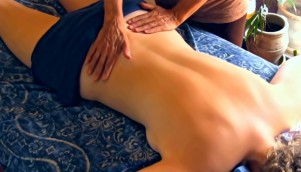 Here’s something I’ve learned sitting at a computer for the last twenty years: sitting at a computer for the last twenty years catches up with you.
Of course, when you’re young, you don’t realise that’s going to happen. When you’re young, you’re invulnerable. I used to lounge back in a recliner, my feet up on the desk, the keyboard on my lap, angled so I could also watch the TV, which was adjacent to my computer.
The next day? Not a problem at all.
If I did it now, muscles would weld into place and I’d pay for it for days afterward.
You hear a lot about posture. And, for the most part, we ignore it. We slump at the computer. Or hunch over. Or sit cross-legged. We think nothing of it because we’re comfortable. Since our bodies aren’t complaining, surely there’s nothing wrong with these positions, is there?
But the truth is that while we’re sitting obliviously, things are happening inside our bodies. Muscles are twisting. The spine is thrown out of whack and glacially, discs are sliding. We’re not feeling these things as they’re occurring, but they are and, inevitably, there’s a tipping point. Over twenty years that one disc which has been stressed due to your head being hunched forward slides, slides, slides and starts impacting on your spinal cord. You get pins and needles in your fingers, or pain in your arm. The neck tenses to hold the disc in place. The tension draws on the muscles enveloping your skull, pulls them taut, resulting in headaches.
Measures to address these problems are stopgap. Sure, a massage is nice, and it loosens the muscles but how long do the muscles remain relaxed? Once you’re back at the computer, they tighten again. Some muscles learn to adopt that new curled position as their natural state, which then requires extensive physiotherapy to teach them to unlearn that position. If you have a disc problem, either it becomes a question of management, or – ultimately – surgery. Surgery to fix a disc problem in the neck entails going through the throat (well, actually, they shunt the throat aside, but go in through the front), pulling the disc out, and fusing the discs above and below it for stability. Sounds like fun, huh?
These issues worsen when we’re tense, and as writers – and also as editors – we tense often. People not in the industry don’t understand what it’s like to sit at a computer and, as a writer, be stuck. Be stuck? Preposterous! How could that be an issue? Because it’s frustrating. You take all that energy, all that creativity, all that emotion, and bottle it into a person until it hunches them over the computer, trying to find a release. It’s unhealthy. It’s worse as an editor when you’re working on something that’s twisting you out of shape, scrunching you up until you’re a pretzel.
A physio once told me that the human body isn’t designed for sitting, citing primitive tribes who squat when they eat, rather than sit. We’re built to roam, to hunt, to take care of ourselves. The body is built for motion, but modern living encourages us to be stationery, to be hunched over – hunchings that are growing worse as we all hunch over our smartphones and tablets.
TAKE CARE OF YOURSELF!
Here are some basic tips:
- apparently, sitting bolt upright is also bad for the spine, as it puts pressure on the discs. So sit as if you’re leaning back just a bit.
- get your flatscreen level with your eyes.
- if possible, find a keyboard rest that props up your keyboard on a 45 degree angle. Looking down at your keyboard is murder on your neck.
- don’t sit with one leg crossed over the other. This pulls muscles (in your back) into unnatural positions. Remember, muscles are connected – stressing one affects the others.
- get up every forty-five minutes and take a little walk around the room. Stretch.
- if whatever you’re working on is tensing you up, relax. If you insist on being tense, at least get up and be tense.
We often live like there’s no tomorrow, ignorant to the damage we’re inflicting upon ourselves. But not one of us are impervious and if we’re not careful, we will face that day when our bodies can bear the burden no longer and complain, ‘Enough! Enough!’ Unfortunately, the body’s mode of communication is usually pain.
Take care of yourself.
Nobody else will.
L.Z.
P.S. A thanks to one of assistant editors, Helen Krionas, for the suggested topic.
P.P.S. Don’t forget to vote for us in the Leader Local Grants for our Books With Wings project. You can read more about it and vote here! Please vote as it’s a worthwhile cause.
From the Heart (Guest Post by Ashley Capes)
June 2, 2014 I’ve been trying to come up with some good advice for submitting to a competition. Rather than preaching something new, I’ll instead repeat something I was once told – which is to “do everything you can to stand out.” At least, for the right reasons of course.
The first simple step as I see it, is to get a hold of the competition guidelines and make sure you follow them.
That way, the first impression you make isn’t a bad one. Simple but classic advice, and yet, it happens a bit and always saddens me. As a poet, I know the care we put into our work and the big step it can sometimes be to submit our work to a competition, so it’s a shame when a writer disqualifies their own entry with a simple oversight.
Now, more importantly – the poem itself. I hope people find these two pieces of advice useful, perhaps for any competition in any genre: 1) Surprise the reader and 2) Be authentic. Now, both of those suggestions are perhaps a touch vague as they stand and one might even be misleading at first glance, so I’d like to discuss them a little for a moment.
Surprise. With surprise it’s not about providing a twist ending or ‘shocking’ content, so much as taking the reader somewhere unexpected. Let the judge see an old thing with new eyes, experience a familiar setting with new senses, rethink established ideas and norms with your poem – whatever you write on, make it worth a second look. You’re going up against the best poems of every poet who submits, so it’s your job as a competitor to stand out from the crowd.
In terms of authenticity, the quality might be harder to describe in terms of a poetry competition. Poetry, like all art, filters through the lens of the artist so of course it’s going to have the stamp of authenticity on that level. Your world view and experiences inform your poetry. But what seems to go awry with some entries is a fear of the self – a lack of confidence, perhaps – and an urge to rely too heavily on artifice.
Instead, use your worldview. Use your experiences and present them honestly and if there’s an urge to censor yourself, resist. Censorship of poetry has to be the death of poetry – and sometimes the one who censors most is the artist. Resist the urge.
Make what you say matter to you. And this might mean that a poem is political or focus on social commentary; it can be anything so long as when you look back on the poem in ten years, you can still feel the sting of its emotion. A truly authentic poem is one where, no matter how much time passes, you still know what you were thinking when you wrote it, you still know who you were when you wrote it, and you still recognise that it mattered to you.
And, still be proud that you said something authentic about human experience, perhaps.
So there’s some rambling on submitting for the competition, hope it helps!
Ashley Capes
(N.B. from the editor: are you a fan of Busybird? Support their upcoming projects by voting for Busybird to receive the Leader Local grant here.)