The Writer’s Vulnerability
You know what a natural habitat for predators is?
The indie publishing landscape.
Yep. They’re after YOU.
The predators will prey on your inexperience, exploit your naivety, and profit from your dreams.
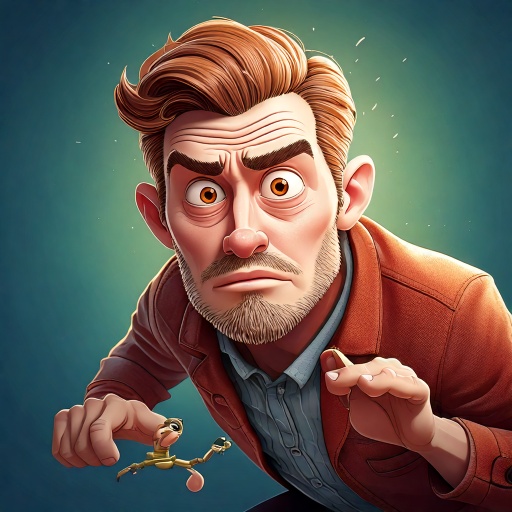
But you wouldn’t know any better, because predators aren’t vaudevillians. They don’t twirl handlebar moustaches and dress in black. They cloak their intentions with a smile, charm and seduce you with what you want to hear, and befriend you so that you couldn’t possibly imagine them ever wronging you.
They will, however, if given the chance.
And they exist in every facet of your writing journey.
A Quick Aside on Rights and Royalties
Self-publishing is a derivation of traditional publisher, so there’s a lot of the same terminology, although they’re applied differently.
Here are the two main things you should know about your writing when it comes to publishing …
Rights
When you sign with a traditional publisher, they gain the right to publish your book. That means you can’t take the book and publish it elsewhere or even self-publish it. If the publisher didn’t have the rights, you could do this.
Don’t like your existing publishing deal?
Well, go shop yourself around.
Uh uh.
The publisher owns the rights to your book. It’ll be for a set time, and sometimes it might be region-specific (e.g. they own the right to publish the book in Australia, but an international publisher could acquire the rights to publish it in their own country with no infringement), but it simply protects their investment in you.
Royalties
With traditional publishing, you don’t pay a cent to publish. The publisher’s taking a chance on you and backing you financially.
Since they’re taking all the risk, they’re entitled to the bulk of the return.
Your royalty will be around 10%. That sounds low, but it’s standard for a first-time author. In some cases, it might be a little lower. Sometimes, there might be a bonus built in, e.g. if you sell XX amount of books, then the royalty increases to 12%.
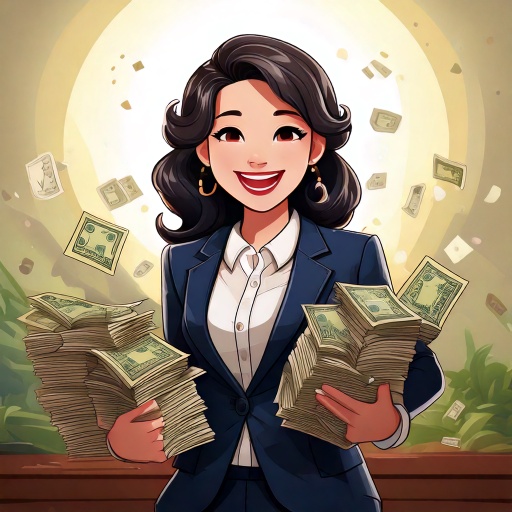
You might also get an advance (a small lump sum up front), or what’s called an advance against the royalties (which means the royalties have to pay off the advance before you see anymore royalties).
Indie Publishing
Blaise, who used to run Busybird Publishing before her unexpected passing in 2022, would say at talks and workshops that if you pay even just $1.00 for publishing, then you’re self-publishing.
If that’s the case, whoever you’ve retained should not make any claim on your rights or royalties. And just to emphasise: none. You’re paying them for the labour of producing your book – so here, you’re taking the entire financial risk. If that’s the case, why should they own any of the rights and any of the royalties?
The only exception as far as royalties go is if they’re selling your book through their own shopfront, then they should make a commission on those sales (but not any of the others).
I know personally of one self-publisher who charged an author almost ten thousand dollars to publish. She sold over three hundred books. That’s a big number in anybody’s vernacular.
And just how much did the self-publisher pay in royalties?
$19.00.
That’s it. $19.00 freaking dollars!
With those sorts of numbers in sales, that author should’ve made about $1,000. The author wasn’t aware that she’d signed away a bigger return because all the language in her contract was in legalese. She had no recourse. The publishing director of that business was a dick.
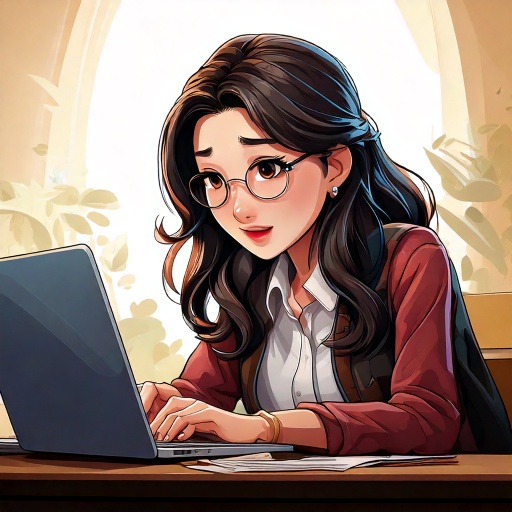
This is bullshit.
As an aside, the Australian Society of Authors runs a contract review service: https://www.authorslegal.org/home
A simpler way to check, though?
Ask if you’re signing away any rights or royalties.
If you are, negotiate, or walk away.
Just remember, you’re self-publishing – it’s a pay-to-play game. If one business isn’t giving you what you want, find another.
Better yet, find an Author Service Provider. While we have “Publishing” tacked onto out moniker, we’re more-so an Author Service Provider – providing authors the service to publish and requesting none of the rights or royalties.
You have all the power.
Exposure
As writers, we all want exposure.
We want readers.
We want our writing to reach as many people as possible.
We want to touch the world in some way.
While we should write for the passion of it, for the love of communicating our story, a natural byproduct is wanting to infiltrate as big an audience as possible.
We all have ego.
Unfortunately, there are people who try to capitalise on this need.
Unscrupulousness isn’t restricted just to the act of publishing.
Marketing
Recently, I was contacted by a random on LinkedIn, saying she loved my book and would be interested in reviewing it. I have six books, with one that was rereleased in early December of last year (so technically seven), so her question was very open-ended. I also knew what to expect from this exchange.
Which book? I wrote.
Miss Random never got back to me because she knew nothing about my work. If she’d listed a title, I might’ve asked her a question, like, What did you like about it? That would’ve exposed she knew nothing about me and my work. In fact, she hadn’t even gone as far as looking at my profile, or checking me out on Goodreads, and throwing an actual title at me.
The next solicitation did – well, sort of. I love your work at MidnightSun, she wrote me, and added she’d love to help marketing me.
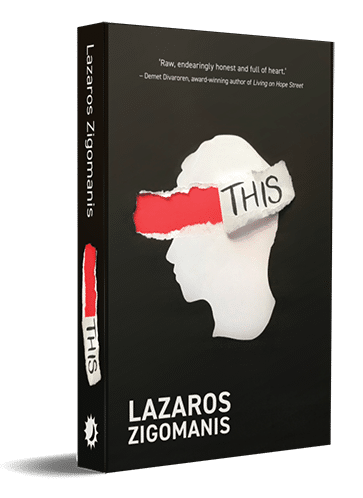
MidnightSun published my Young Adult novel, This, in 2023. The way Miss Marketer phrased the question, it sounded as if I worked at MidnightSun, or that I’d published a litany of books there, and she would help build my profile.
I asked, What work?
It was the simplest of questions, but Miss Marketer hadn’t expected to be countered. She probably expected something like, Oh, wow! Thanks! That’s so flattering! And then she could unload a spiel. But without genuine insight into my relationship with MidnightSun, who I was, or what I wrote, she changed tack. She asked if I wanted help being marketed as a writer.
This one had at least looked at my LinkedIn profile (and LinkedIn reports when people do so), and based on what little information she could glean, she thought she could throw out bait to catch me.
You love my work?
You want to help give my book exposure?
You want to help me improve sales?
Oh yeah! Where do I sign up?
The Unsolicited Solicitation
Such solicitations are common. I hear from authors who’ve been approached via email or social media with similar offers. These people talk a good game. They know just enough to make you think they’re genuine. And, of course, we want fame, fortune, and the dream we’ll be THE NEXT BIG THING, don’t we? So, we invest out of ego, rather than commonsense.
Here’s a simple reality: legitimate publicists, book reviewers, marketers, et al., usually don’t cold call.
If somebody approaches you like this, question them. If they’re legit, they should have no problem answering you.
I had one person say she could generate reviews for me. I asked to see samples of her work. She gave me the names of a couple of authors she’d worked with. I checked out their books: they each had about five reviews on Goodreads and on Amazon – five reviews. Hardly a pendulum swinger.
These things regularly happen on social media. I’ve had numerous approaches on Instagram. I might post a picture of one of my books, or a link to a blog post. Then somebody will either comment, “Share it on [INSERT ACCOUNT NAME]”, or they’ll message and ask if I want to share it on their account, as they have XX followers who’ll see it. It only costs you $XX.
In one case, somebody wanted to feature my book on their page because it would give me BIG-TIME EXPOSURE. I knew exactly what I’d be getting but decided to do a little investigating anyway, so headed over to their account.
Their page was a garish matrix of images that enjoyed no synergy, although posts did feature books with over twenty-thousand likes. I chose three at random, found their authors on Instagram, and messaged them, asking about their experiences.
The first person responded immediately. She said because it was inexpensive ($50.00 US) she thought she’d give it a try. The account then put up a post of her book. She said when she first checked, the book had about five likes. Then, she stepped away from her computer, and when she checked again about twenty minutes later, her book suddenly had over 20,000 likes.
Minutes later, one of the other people I messaged responded with a similar experience.
This is not an uncommon story.
The Illusion of Quantity
I’d experimented with something similar on Instagram about four years earlier, although instead of featuring one of my books, the person soliciting me said they could increase my followers. Because it was inexpensive and I’d just entered this job and wanted to familiarize myself with what our authors might face, I thought I’d give it a try.
That evening, I was sitting at my computer, writing; sometimes, I prop up my phone against the computer stand. On this occasion, it dinged, showing somebody had followed me on Instagram. Then people were following me in such rapid succession that my phone couldn’t get a full ding out. Notifications were flickering – one wouldn’t have time to fully appear before the next one replaced it.
Welcome to the world of bots.
Have you heard of the Dead Internet Theory? That the bulk of interaction online is driven by bots? When you see stuff like this, it’s hard not to give that theory some credence.
Now, I’m sure there’s somebody who thinks the flip side of this is that if you have numbers like this following you or liking your book on some page, then it creates the illusion of popularity, which also implies there’s a demand for that person or product.
Yep. Maybe.
It’s no different to going to a bookstore and seeing a pyramid of some author’s books. If the bookstore’s stocking the title in those sorts of numbers, then it must be because they expect to sell them all, which means there must be a demand. So, even if we don’t know anything about the book and/or the author, we’ve already inferred a narrative.
But let’s break down that Instagram account: if the prevalence of likes come from bots, then just how much traffic is actually moving through that account?
And if there’s little traffic moving through that account, then how much exposure is your book truly getting?
Are There No Genuine Solicitations?
Let me go back to the guy who offered to increase my followers: he was, at least, honest. He didn’t pretend he knew me, he didn’t pretend he knew any of my work. He was proposing a transaction – money for followers.
In retrospect, I should’ve asked him if those followers would be real people or bots. Would that have changed my mind if he’d admitted they were going to be bots? Probably not, because I still wanted to see how it worked. But it’s never something I’d employ on a grand scale.
I’ve had similar approaches from reviewers making similar offers – for XX dollars (usually around $50.00 US) they would review my book. They’re not pretending to know of me, or know of my work. So at least their solicitations are minus any sort of pretence.
Competitions
Not all these scammers come to you, though.
There are tons of writing competitions out there that act like sirens lulling sailors to their doom. You might stumble upon them through a Google search, or you’ll see a social media ad, or someone you know or know of might’ve entered previously and come away with a win or a placement. So, hey, why not give it ago?
Here’s the most brutal reality: most of these competitions aren’t going to increase book sales. Now, if that’s the case, what’s your expectation on the return? Because you do have an expectation.
This is important to identify, because entering any competition should have a return that’s going to benefit you.
Check out what the prize money is. If it’s not about the prize money and about exposure (e.g. introductions to literary agents; some screenwriting comps promise exposure to producers, directors, and managers), then research whether that exposure is valid, and just how much it might help you and your writing.
Too many of these competitions mask themselves in faux prestige but only return stickers or certificates to say you’re a winner or a finalist. You don’t think about that, though. You’re so happy with the acknowledgement, that you don’t examine that a sticker or certificate isn’t exactly that valuable a prize, and it’s certainly not going to help you.
Others compel continued investment(s), although they’re not entirely upfront about that. There’ll be an entry fee. Check. That’s legitimate (even though some comps are free). But, later on, they’ll invite you to a glamorous reception where the winners are announced – it’s just $199 per ticket. You can get a trophy commemorating your victory or placement – that’s just another $499.
Etc.
These places aren’t outright scams, because they do what they promise, but the subtext is that their model is a great revenue generator for themselves, and it really doesn’t do much for you, other than to convince you that your investment was worth it and you have some temporary bragging rights that are as valuable as fool’s gold.
Be Vigilant
Most of us write for the love of writing – because we have something we want to share. I wouldn’t have to explain to anybody reading this how an idea will pop into our heads, gain traction, grow, and then demand to be heard.

So, we begin the process of getting it down on the page.
That journey itself should be its own reward.
But we do live in a pragmatic world, and the truth is that we’d all like to sell some books. It’s not the motivator as to why we write, but it would be a great by-product of the venture.
And, you know what? There’s absolutely nothing wrong with that. The late, great Bryce Courtenay said a book’s not a book until somebody reads it, and obviously we want our work read by the biggest readership possible.
Just be aware that there’s the potential for missteps in your journey. You’re not expected to be able to identify every potential peril.
I only recognize them (or recognize the potential) because I’ve been around this industry for so long, and I’ve made a lot of mistakes along the way. I’ve known or known of people who’ve operated like this, and I’ve known authors who’ve suffered, so it always pisses me off when these things occur to good people.
Be vigilant.
If you’re unsure about anything, feel free to drop us an email.