
Fresh out of university in 2023, I was a junior nurse working at a public hospital. At work, each shift would consist of either mundane jobs such as vital sign observations (checking blood pressure, pulse, respiratory rate, etc.) or complete chaos of medical emergency calls. By the end of the year, I felt confident with managing both the predictable and the unexpected tasks.
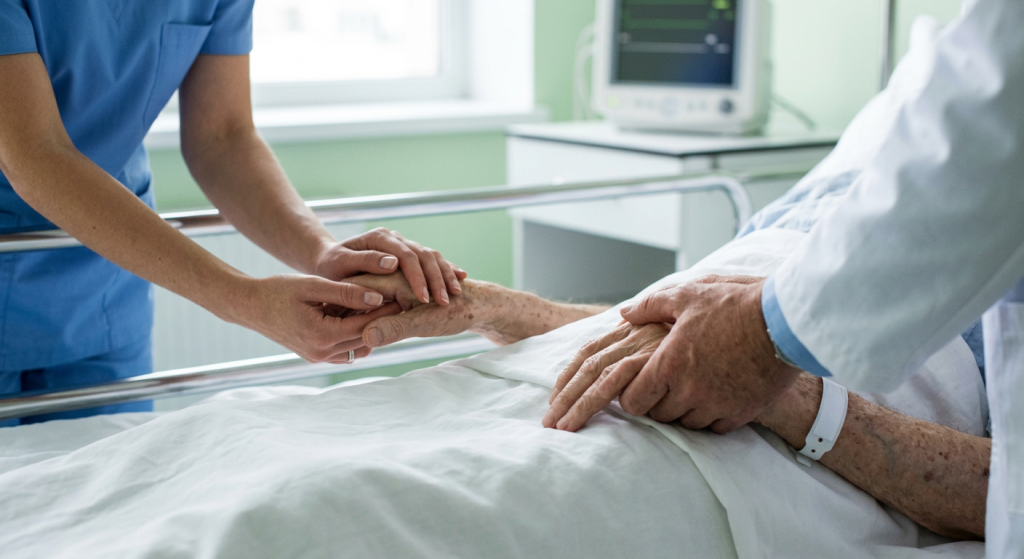
That was before I witnessed the traumatic death of a patient. As my patient gasped for air one last time and went still, the doctor standing across from me – holding the patient’s other hand – looked up. Our eyes met, and the doctor gave a small nod, a silent agreement that we both knew it had been her final breath.
I stood frozen, holding the patient’s hand, terrified. My patient had just passed away in front of me.
No, a person just died in front of me.
A life just went out of a person, echoed in my head.
I had seen death before, but never like this – not the exact moment of leaving, not from this close, and not with one of my own patients. Tears came before I could stop them. The silence filling the room between the nurses and the doctors was suffocating. I had to escape it. I had to run out as quickly as I could. I couldn’t bear to stand in that room, faced with death and the unfamiliar weight of grief.
Fast forward to March 2025, another patient of mine passed away. Ironically, it happened just after all the doctors and nurses had stepped out briefly, leaving only her daughter and me at the bedside. Once more, it became my responsibility to stand next to death. But this time, I could be there until the end.
As I listened to my patient’s laboured final breaths, I took her hand in mine, rubbing her shoulder gently with the other. When her breathing came to a stop, I felt her empty pulse and closed her eyes. Hours later, I noticed her warm hands turned cold as I changed her gowns, washed her, and prepared her body. Even then, I could stay in that room and whisper my goodbyes.
These past few months have been like that. Some things could no longer reach me or wound me the way they did the first time; experience has given me armour in certain places and scars I can lean on.
Yet, there are still moments that felt like a sharp, new sting, piercing through places I didn’t know were unguarded.
So many experiences and emotions, in work and life – different patient’s heartfelt stories, the exhaustion that clings after every shift, and the growing absence of those I miss – made me want to run out of that room again. Certain aches also circle back in ways I never expect, and I find myself running away, hiding in the pan room, crying.
But I am slowly able to tell myself that one day these heavy moments will stand between me and the worst of the hurt, protecting me in the name of ‘lived experience.’ And even if I cry over the same things I thought I’d healed from, maybe that’s okay, maybe feeling this deeply is part of living fully.
Hayun Jeon
Editing Intern
Hayun, thank you for voicing such raw, intimate experiences with death. A hospital is often the last place a person feels cared for and loved and it’s staff who are often the face of that love. You are a special human being.