Busybird
Welcome to the Busybird blog, where you can find helpful articles, updates, industry news and more. Make sure you stay up to date by signing up to our newsletter below.
Writing and Reading in the age of AI
December 13, 2023Like many people who dreamed of a career in publishing, I’ve always loved books. For years the allure of the author enchanted me: slaving away for months or years on a manuscript before finally handing it over to a publisher. What happened to it after that was somewhat of a mystery to me, and it wasn’t until university I realised it takes a village to raise a book. It passes through many human hands before it ever reaches a reader, and when done well, the reader will never know.

The danger with this mystique is the process may seem unnecessary – to the reader or the author. The rise of AI has only added to the problem, with many tools promising to do the work of editors, proofreaders, typesetters, and designers – even the work of writers themselves.
Historically, standing in the way of technological advancement has been a fool’s errand, often the butt of jokes years later. So is there any point in trying to stop this? Can we? Should we? The pitfalls of rapidly advancing technology are often not examined or discovered until years later when they became entrenched and difficult to change. AI is still in its infancy. The more we know about how our favourite art and books are made and how AI (poorly) imitates this, the better.
The logical place to start is asking how Large Language Models (LLMs) like ChatGPT actually work. These programs are usually fed large samples of data (be that books, internet forums, social media posts and blogs like this one) which it searches for patterns of language. This makes these programs excellent at spitting out the most standard answer for simple questions or prompts. Not only can it not produce anything new, but it will always seek the average answer. If fed bad data, that answer could be wildly inaccurate, or in the best-case scenario, simply boring.
When applied to the task of writing, LLMs shave off all the distinguishing features that make a work unique by design. Even if trained exclusively on an author’s previous own work, it will reproduce their most common patterns and tropes in a Frankenstein-esque amalgam of style. And that is charitably looking at the consensual use of an author’s work to try and produce AI texts.
In September of 2023, a group of high-profile authors including John Grisham, George R.R. Martin, and Jodi Picoult filed a lawsuit in US court suing the owners of ChatGPT for copyright infringement – for training their LLMs on the authors’ material without their permission, and certainly without licencing the material to do so.
The use of LLMs to produce writing has been the most high-profile discussion happening around publishing and the new technology, but what about its applications that are less visible? The same problems with LLM’s inability to write outside the box persist when applied to editing a work, perhaps in more insidious ways. It is far easier to accept a suggested word or phrase without thinking, or to simply tell one of these language models to edit a story to its standards without examining the changes it’s making. It’s cheaper, it’s easier, it’s worse. As these tools become more integrated with our writing software it would be all too easy to cut editors out entirely.
But what do editors really do for a book? A LLM may eventually be able to technically correct the grammar and syntax of a novel, but what about cases where less than perfect choices add to the work itself? Looking at the subgenre of hilarious predictive text fails and some of the more questionable suggestions from your word processor should be enough evidence that the most common answer isn’t always the right one. A novel isn’t written the same way as an instruction manual, and a thriller might be written in a very different style to a romance novel. Editors can understand intent and style in a way that a LLM likely never will, and work to help differentiate an author’s voice rather than standardise it.
The greatest challenge from LLMs and AI is ultimately not their newness, but the fact that they are cheap and fast. How could an author or an editor compete with effectively free and the ability to spit out writing in seconds? Is the end result just a race to the bottom as endless AI content is churned out, leaving human-driven content to be buried under the avalanche? It’s certainly a concern, and the effects have already been felt across many areas of publishing.
Online marketplaces have been flooded with low-quality AI work attempting to scam readers into buying what looks like a legitimate work with potentially life-threatening results. AI-generated mushroom gathering books told readers to pick deadly mushrooms for consumption. While the original works identified were removed from sale on online sites, new suspected works started cropping up faster than they could be reviewed … spreading like a fungus.
Given the ease and relative lack of visibility through which AI can permeate into writing and reading spaces, the outlook is grim but not hopeless. As an industry and as readers, we can vote with our capital and stay informed on what goes into what we read, even supporting human-driven work if it’s more expensive.
Here in Australia, there has been a consistent shift towards shoppers buying free-range eggs despite higher price tags, with cage eggs now only representing 35 per cent of all sales. In 2001, only eight per cent of all eggs sold were free range. Closer to the topic at hand, ebooks were predicted to completely replace print books. However, print sales continue to make up the vast majority of all book sales.
We all want to keep quality books, film and art alive and thriving into the future, and it’s important to remember that their downfall is not inevitable. Like any technological advance, LLMs are not going away. They inevitably will form part of the creative process in the future, but we can control which parts.
Sarah Neilsen
Editing Intern
Orange Hues
December 5, 2023The Oxford dictionary defines orange as a ‘bright colour that is between red and yellow’, such as, There was a warm orange glow in the sky. Of course, it also sparks the debate of whether the fruit orange is named because it is orange, or if it is the inspiration behind the colour itself.

I never found orange to be a particularly profound colour. As a kid my proudly chosen favourite colours were red and pink. I imagine most of this decision came about when I learnt the meaning of my name: ‘a precious stone ranging from deep crimson to pale rose.’ I didn’t entertain the concept of blue or other cool colours until my late teen years where I wore silver hoop earrings with a single pale blue glass bead on them.
If someone were to ask my favourite colour now, it would be a deep and husky orange. It is also citrus season now, and spring is bringing in tangerines and mandarins, orange by the kilo.
Coincidentally, it is also the colour of the Busybird door, walls and logo.
***
I have been thinking a lot about the influence of the colourful digital world on reading, particularly in relation to attention span.
As a kid, I was glued to books. I suspect 98% of adults going into the publishing world were the same at some stage. This noticeably changed when I got my first iPod touch when I was twelve. I would say it was a slow filter out of books replaced by Instagram sepia toned filters and reading trivial Facebook statuses. It wasn’t immediate, and it was never an all or nothing situation, but it was a definite cause and effect.
In the last few years, I have made a conscious effort to get back into reading and immersing myself in the written world, as the shortening of videos through TikTok and ‘reels’ have attempted to do the opposite. Getting out of the virtual world is a big part of why I drove across the country two years ago and doing an internship here seemed like an amazing opportunity, and an obvious next step.
I just got back to Busybird after two weeks away, visiting Broome in the far northwest of the country. The remote, desert rolling into the sea life of the town is unique and something that radiates a soft, addictive glow to so many visitors, passing through or permanent.
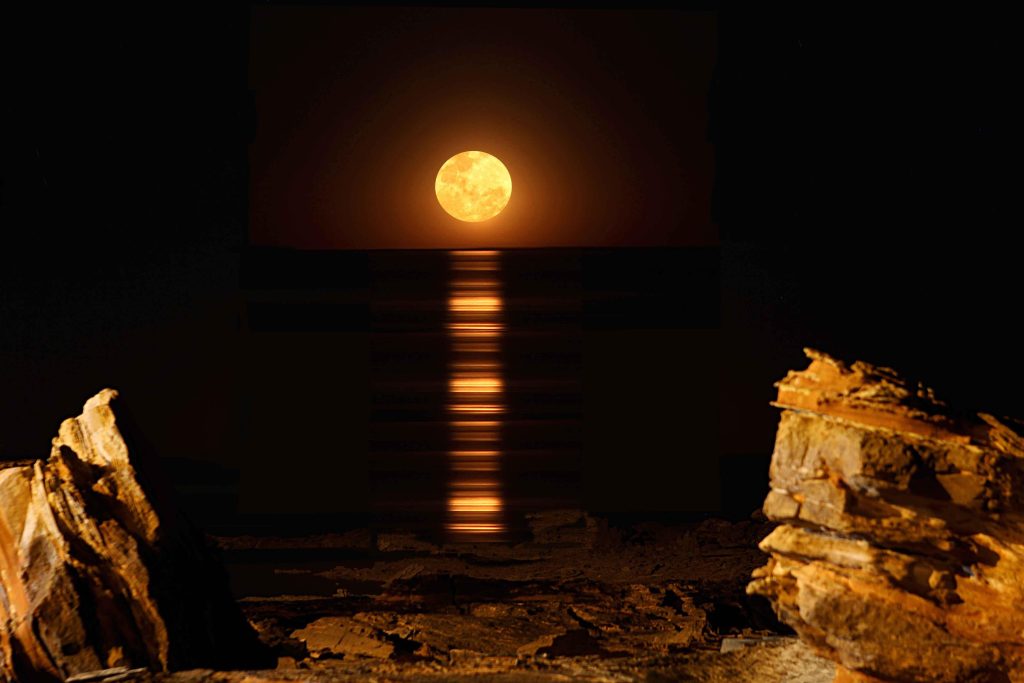
Broome is softly ruled by the moon; king tides wash into Roebuck Bay and out again to make way for the Staircase to the Moon, and people abide by the daily and monthly lunar calendar events. The colours of the pindan in the dirt stain everything, from your car tyres to your toes, orange. The contrast of this to the bright blue of the churning ocean is an iconic Australian image.
I lived there last year through both the Man-gala (wet) and Wirralburu (dry) seasons. I would watch the sunset on Cable Beach whenever I could, even taking my assignments down to the beach if that was the only way I could get a quick swim in.
I moved to Melbourne this year, to finish my Arts degree at the University of Melbourne, majoring in media/communications, with a minor in law and justice. Even though I have spent a lot of time here in the past, adjusting to the city is a big change from growing up in Tasmania and living in a rural outback town.
I think something I have missed most (aside from the orange dirt and stark, contrasting colours), is the friendly openness and sense of community that comes in such a small, transient place.
Doing an internship at Busybird has grounded that for me a bit more. Where it is easy to feel like a cog in the system at university, doing something that is hands on, engaging, and tickles the wordy, creative part of my brain, has been so welcome. The Busybird studio is a colourful, lively space and Les, Kev and Oscar are encouraging of learning all the publishing bits n’ bobs through biscuits, 80s music and rare Rubik’s cubes.
As someone who has always been drawn to storytelling, whether it be through reading, writing, or acting, it has been so great to see the behind the scenes of what goes on in the publishing world.
Being able to go back to Broome last week was great in many ways, but particularly because I felt ready to be back in the city, a surprising realisation to come to.
My internship is a comfortable, exciting part of my everyday routine that I’m so grateful for.
Ruby van der Walt
Editing Intern
Sometimes the Wrong Path is the Right One
November 28, 2023I spent four years of my life doing a PhD that I hated. Four years to accept that hating it meant it was the wrong path. Four years to abandon my sunk cost fallacy, and stop surviving on bread crumbs – fleeting moments of enjoyment – and an enduring, stubborn refusal to quit, because quitting makes you weak.
And yet, in many ways, quitting was my first true act of strength, the first time I surrendered my pride and actually listened. Gritting your teeth is one thing, but doing something that scares you, challenges who you believe you are, and risks regret … that’s the kind of strength I’d like to get to know better.
It was the first time I’d let myself listen to that ephemeral, spiritual voice – the one that lives in your tummy and your heart and your throat, but not in your brain – since I was a kid and too young, with the wisdom of innocence, to think I knew better than my intuition.
Because while I was proving to myself that nothing could make me quit, that I could endure any punishment (punishment I was allowing into my life, in more ways than just my academic trajectory), I was also signing off on an agreement with myself to not respect or value what was good for me. I was training myself to struggle against my own chains – the circus animal and the whip-master both.
The facts were that I thought I wanted to be a writer, and that the highest degree of education I could possess would somehow get me closer to that goal. But I often didn’t enjoy the overall process of writing, and one week of solid writing would usually take me two months of mental gymnastics to summon the engagement with my chosen craft. I tried every routine, every tactic I could find or think of, and ultimately spent significantly more time trying than I ever did succeeding (with any success I did find always, always short-lived).
Worse still, I did not enjoy rigorous academic research, because where my project existed as research for research’s sake, my heart believed in art for art’s sake – not exactly a motto that functions in a research degree, where everything needed to be academically justified.
My honest feeling was that my own research was superfluous, and although I did have love for my creative project, I detested the academic perspective that ran parallel. A doctorate thesis in the arts won’t change anything or go anywhere, so you should arguably only do it if you love it (although the vast majority will still grow to dislike it given time, so you need to be disciplined – not my strongest trait) or because you require the doctorate ticket for your career.
I didn’t fit that necessary criteria, because deep down I didn’t truly want a PhD. I thought I was self-sabotaging when all along I was telling myself exactly how I felt. But I gritted my teeth and tried to do it my way, over and over again, until my supervisors slowly ground me down, forcing me to fit the mould that every part of me was rejecting.
I was doing practice-led research, which means I had a creative artefact of work (around 80k words) and a supporting thesis (around 20k). When I quit, I had ironically managed to write two 40k drafts of my artefact, and four 5k drafts of my thesis, not including time spent on reading and research.
My chosen subject was interactive fiction: think Choose Your Own Adventure books. It was a blend of my two love affairs at the time: games and books. I researched experimental literature and children’s literature while I wrote a philosophical CYOA that explored the concepts of choice and determinism.
How peculiarly relevant this concept was to my life and learning, because while my mind was focused on interactive literary choice, I was neglecting to make a choice that would change my own life for the better.
I used to scour the internet, on occasion, looking for (what I couldn’t then identify as) people like me now: happy PhD dropouts. But I was often met with articles that still smelled faintly not of regret, but of a kind of shame. I think that shame comes from the same place which conjured my misguided belief that quitting means failing.
My unexpected conclusion on the matter is that, yes, quitting is a kind of failure, but it’s only our ego which struggles to accept the connotation of the word, and the feelings that can linger. Your gut – whatever spiritual instinct we often supress; that inner voice which knows you keener than your mind – understands that failures can be our greatest gifts.
Those years were the worst of my life, in more ways than one, and yet I’m indebted to them for the people they’ve since brought into my life, the new path I couldn’t have found prior, and for becoming a gentler human overall – to those around me, and to myself. The freedom of choice isn’t free of charge; it’s a malady that’s uniquely yours to bear. The wrong path can often be the right one, but only if we’re open enough to listen, brave enough to act, and strong enough to fail.
So here we are, less than a year after I finally showed up for myself, having applied for an internship at Busybird Publishing and finding a space that makes me happy.
The difference in my quality of life is enormous. I respect myself more, practice listening to that voice, and don’t accept or tolerate what causes me genuine discomfort. I still have some kinks to iron out, some troublesome mental habits I’ve trained in: worst of all being my inane hyper-analysis which freezes me into physical inaction. Just getting myself to my laptop can flood me with dread some days. But now, when I listen keenly and allow myself to challenge what I thought I’d always known, I embrace that I don’t want to be a writer.
Instead, I journal mindfully and consistently using fountain pens and beautiful inks, and it brings me the feeling of stillness that I so enjoy.
I’m reclaiming my love of words – my way, the way that actually feels good. The consequence of this leading me closer to a path of peace, my true life’s longing.
Choose wisely,
Skye Blake
Happy PhD Dropout
Rediscovering My Passion
November 17, 2023Books have always been the one passion I have stuck with since I was a little girl. It was rare to see me without a book in hand.
I would squeeze in chapters in-between classes, and I couldn’t wait to go home to fully immerse myself in the book I was reading.
I have my mum to thank for that. She is an avid reader as well, and we would read children’s books together, moving her finger across the words to help me pronounce them.
One of the earliest books I remember reading was Pinocchio by Carlo Collodi. Thanks to this book, and the help of my English teachers, I grew to love the classics: Charles Dickens, Shakespeare, you name it.
Throughout the years, my love for books has only intensified. It has become an obsession. Every waking thought is about the book I am currently reading, and the characters flood my mind. I imagine them in different scenarios, how they would act and speak.
They consume me.
Some part of me always knew that I was going to end up studying Creative Writing, no matter how many passions I’ve had, or urges to study something completely different, or the many obstacles I’ve faced.
Writing is always lurking in the shadows, waiting for me.
My mum had gifted me a small notebook with flowers embroidered on it for my eleventh birthday and told me to just write. And I did. I never took that notebook for granted. It contained all my writings, and it spanned years.
I loved flipping through it to see how much I’ve improved, and I noticed that there were recurring themes I enjoyed writing about: family, friendship, and romance.
Some of that writing is embarrassing to look at now; a few are just bad, but one piece did come in handy much, much later.
Me being a naïve little kid, I didn’t realise just how much of an issue living in Egypt came to be for a future career. I have always been a creative person; I would have found studying Medicine or Engineering (which seemed to be the two main professions Egyptians went into) insufferable. I didn’t want that for myself, and neither did my mum.
We concluded that, if I wanted to study Creative Writing and for my sister to get a better education, we had to leave Egypt. We started researching for countries to move to.
By the time I reached Year 10, I was hopeless. Not one country we researched was suitable for us, and I was running out of time. I had to pick my IGCSE subjects for the career I wanted to pursue, and I had to resort to the second-best thing: Graphic Design. It was a relatively new major in a German university in Egypt and I had to be satisfied with the option I had.
But then I moved to Australia.
In January of 2022, I commenced my foundation studies in Art and Design. Because of constantly being put down and unable to study Creative Writing, I made the mistake of studying something I grew to dislike.
Art and Design was a huge toll on me, and it was the type of demanding I didn’t enjoy. It was a toxic working environment and I was dissatisfied. And now, a whole year after I’ve finished my studies, every time I pass the building, I get shivers.
I knew that this was a major I shouldn’t dedicate the next three years of my life to, and after I was done with Foundations, I stepped back, and I was finally, finally, able to study Creative Writing.
How glad I am of my decision that day.
I applied for a bachelor’s degree while I was in Malaysia, and I sent in a reworked version of one of my old writings from that notebook, accompanied by two new writings for my application, and I got accepted a few weeks later!
I have had so much fun this past year with my studies. I have met incredible people that push me to be the best version of myself, I’ve been taught by wonderful teachers that continue to inspire me every day, and my writing has evolved by tenfold.
As I’m sitting down and writing this, I have officially finished my first (technically second) year of university!
I’ve been fortunate this year, and with Busybird Publishing, I feel the luckiest. Because I’ve been searching for opportunities that will bring me further in my career, I sent in an application for an internship position, and it has been a delightful experience.
I have learned so much: knowing how the publishing industry works, how much time and effort it takes to perfect a book for publication, editing and styling books, how Les has a vast knowledge of 80s music that I still need to broaden my horizons about, how Kev has the impressive skill of solving Rubik’s cubes which he has tried to teach me the secret behind time after time, and how Oscar loves his belly rubs and daily walks.
I’ll always be forever appreciative that I was offered this opportunity.
Thank you,
Farida Shams, Friday intern
Loving something unexpected
September 19, 2023I grew up caring little about books.
The thought of having to sit down and stare at a bunch of words sounded like the end of the world. Growing up in an environment where I was constantly outdoors, I never understood why people would rather bury themselves in a book than socialise and soak up the radiant weather …
… until I was in the school library forcing myself to find a book I could tolerate for class. My plan was to stare at the pages and make it look like I was reading. However, those first few pages sucked me in.
The Dork Diaries Series was the first step to finding the slightest interest in books. The series was written in diary format, consisting of drawings and comic strips to illustrate the life of the fourteen-year-old protagonist.
Sure, I found the book immature and dramatised, but one of the things that kept me consumed was being able to relate to the characters’ experiences and understand the way they felt.
Before I knew it, I purchased the whole series.
The desire to buy more and more books increased. At the same time, the embarrassment and shame of having people in my life see my passion grew stronger. I saw the judgement on my friends’ faces when they heard I liked to read.
My fourteen-year-old self realised reading books wasn’t something to be ashamed of; a part of me was thrilled that others didn’t like what I liked. This could be something of mine and no one else’s. It felt like my own world that I could delve into whether they liked it or not.
As I grew older, my pile of books rose to new heights and the genres expanded dramatically. I started off with young romance, realistic fiction, and diaries, and later I became drawn to dark romance, sports romance, suspense, and thriller.
I didn’t realise it had become an obsession until every waking thought was about a past or present book – wondering about what would happen next, why my life isn’t as interesting as these books, and waiting for characters that I loved to enter reality and make my life a way better story than sitting on my bed with my imagination. (Obviously that can’t happen, but a girl can dream.)
Now, the haunting question every person experiences in their life emerged: What do you want to do in the future?
I was always able to come up with an answer whether that be a teacher, therapist, illustrator, youth worker, actress or psychologist – all of them had one thing in common: they were all something I thought I would be good at.
Helping others and using my creativity to pursue something has always been a skill of mine I wanted to put into play. However, I was always looking for something else. My past ideas never consumed me and if I wanted to make a career out of something I wanted to fully love it, not just like it.
So, author it was.
English had always been my strongest subject, I lived and breathed writing and reading from the age of fourteen. Everywhere I went, my journals would be attached to my hip, and I’d stick in anything I found in, whether it was a leaf, a bottle wrapper or some branded sticker. It went in those pages and I wrote the hell out of them. My love for storytelling had always existed through drawing or writing, so wanting to be an author made a lot of sense to me.
Once I started sharing my hopes to become an author, people’s eyes started falling out of their sockets and their mouths dropped to the ground. They loved the idea. People who looked at me with doubt and judgement not understanding why I loved to read in the past changed their thoughts, and I found that interesting.
Why all the sudden was it such a good idea? And why did they support the idea of books now?
The increase in people’s support didn’t change how much I wanted it, it did not dictate my love for reading and writing and it did not change my viewpoint on authors. It only made my pathway more clear, seeing as I had people around me who believed I could do it.
I loved being able to empathise with a character, see their personal growth in a whole book and be inspired to create the same feeling. Curiosity took a tug on me, and before I knew it I was researching all about the process of writing a book and what authors did to become successful and how they created these worlds.
A few months later, Work Experience forms were travelling to the whole Year 10 cohort. Some dreaded making a decision and others wanted nothing more than to find a place to work at. There were two reasons work experience was occurring:
One) to find a possible job or,
Two) to find a future career.
I decided instead of trying to land a job, I wanted to find out how to become an Author, and the process of writing a book and the challenges that would come along with it.
Then Busybird Publishing fell right at my feet and I decided to take that further step to figure out whether this career was meant for me.
I owed it to myself.
I’m in the midst of my work experience right now and I can safely say it is definitely an experience I won’t take for granted. Learning how books are created and the ways of editing has been an eye opener.
Seeing the fluffy golden Labrador, Oscar, as soon as I walked into the warm and creative atmosphere definitely confirmed my stay. Oscar definitely made the days brighter and the times at home rough with my young Labrador’s jealousy, but I can say it was definitely worth it.
Thank you, Busybird, for creating a safe and inviting space.
Bella Pozza
Work Experience.